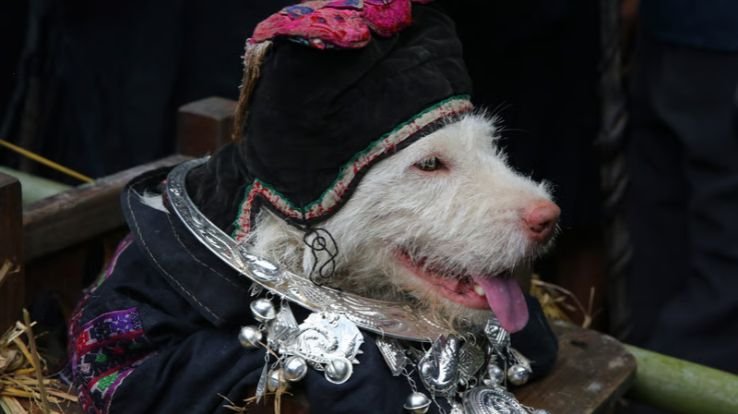
A centuries-old Miao tradition in Guizhou celebrates dogs as symbols of survival, gratitude, and harmony with nature.
In the mountainous region of Guizhou in south-west China, a distinctive cultural celebration continues to attract attention for its heartfelt tribute to dogs. Known as the Dog-Carrying Festival, this centuries-old tradition is observed by the Miao ethnic community, which regards dogs not merely as pets but as revered animals believed to have played a crucial role in their ancestors’ survival.
Held every year in Jiaobang village, Jianhe County, the festival takes place in the seventh month of the lunar calendar. Deeply rooted in local folklore and customs, the event reminds the community of its enduring respect for nature, animals, and ancestral wisdom.
At the heart of the celebration is a ceremonial dog chosen to symbolise the village’s appreciation for its canine companions. The animal is dressed in colourful traditional Miao attire and adorned with symbolic accessories, including a handcrafted tiger-head cap and an ornate silver neck ring. Seated in a bamboo sedan chair, the dog is carried through the village streets as residents gather to watch the procession. A ritual priest accompanies the parade, reciting traditional prayers and blessings handed down through generations.
The festival’s origins are linked to legends that still hold a special place in local culture. One popular tale recounts a severe drought that threatened the community’s crops. Villagers are said to have followed guidance from a dream, which suggested that praying alongside a dog would bring much-needed rain. When rain eventually fell, the dog was credited with helping to save the harvest.
Another story tells of a dog guiding early settlers to a hidden water source in the region’s rugged limestone terrain. In an area where reliable access to water was essential for survival, the discovery became a symbol of hope and prosperity. Over time, these stories elevated dogs to a place of honour in the community.
The festivities extend beyond the procession. Villagers take part in traditional drum performances, communal gatherings and playful mud-splashing, all linked to prayers for rain, agricultural success and favourable weather.
The festival also promotes compassion and respect for animals among younger generations. Through stories, rituals and community participation, villagers preserve their cultural heritage while expressing gratitude to the animals they believe helped shape their history.
Today, the Dog-Carrying Festival remains a vibrant celebration of tradition, highlighting the deep bond among humans, animals and the natural world.