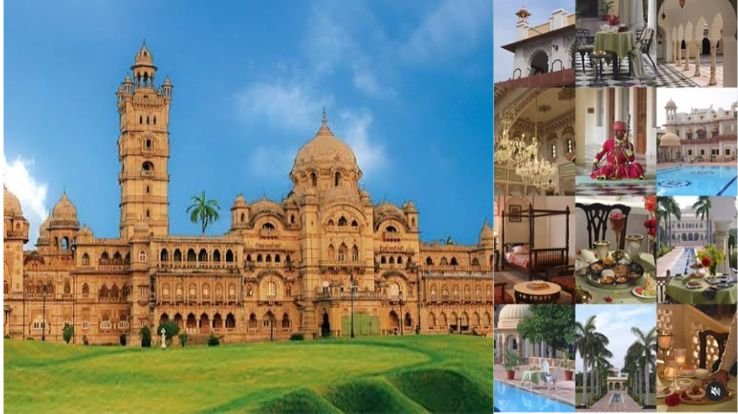
Vadodara’s heritage estate outshines Antilia and Buckingham Palace.
When the world’s largest private residence comes to mind, many immediately picture Antilia, Mukesh Ambani’s glittering skyscraper in Mumbai. Yet the true crown belongs to Gujarat’s Vadodara, where the Laxmi Vilas Palace stands as the grand seat of the Gaekwad dynasty. Built in the late 19th century, this sprawling estate remains unmatched in scale and splendor, surpassing both Antilia and even Buckingham Palace.
Commissioned by Maharaja Sayajirao Gaekwad III in the 1880s and completed around 1890, the palace was designed in the Indo‑Saracenic style, blending Islamic and Renaissance influences. Its construction cost six million rupees- an extraordinary sum for the era reflecting the ambition and vision of the Gaekwad rulers.
The palace complex stretches across 500 acres, encompassing far more than a residence. Within its grounds lie a 10‑hole golf course, the Moti Bagh Cricket Stadium, an ancient stepwell, landscaped gardens, and the Maharaja Fateh Singh Museum. The palace itself boasts over 170 rooms, three courtyards, an armoury, and recreational facilities including tennis and badminton courts. The Durbar Hall, once reserved for royal audiences, still serves as a venue for cultural and political gatherings, including Prime Minister Narendra Modi’s meeting with Spanish Prime Minister Pedro Sánchez in 2024.
Today, Laxmi Vilas Palace is home to Maharaja Samarjitsinh Ranjitsinh Gaekwad, his wife Radhikaraje Gaekwad, and their daughters Padmajaraje and Narayaniraje. Samarjitsinh inherited the title in 2012 following his father’s passing, while Radhikaraje- a former journalist and descendant of the Wankaner royal family has played a pivotal role in opening the estate to the public.
Far from being a secluded royal enclave, the palace has embraced its role as a cultural hub. Annual dance festivals, vintage car exhibitions, craft fairs, and musical performances bring its historic halls and gardens to life. By welcoming visitors, the Gaekwad family has ensured that the palace remains not only a symbol of royal heritage but also a living monument for the people of India.
As Radhikaraje Gaekwad aptly remarked, “Lukshmi Vilas Palace is ultimately for the people of India. We are lucky that we get to call it home.” Her words capture the essence of this extraordinary estate- a residence that is both a private sanctuary and a public treasure, preserving India’s regal legacy while continuing to inspire awe in the modern age.