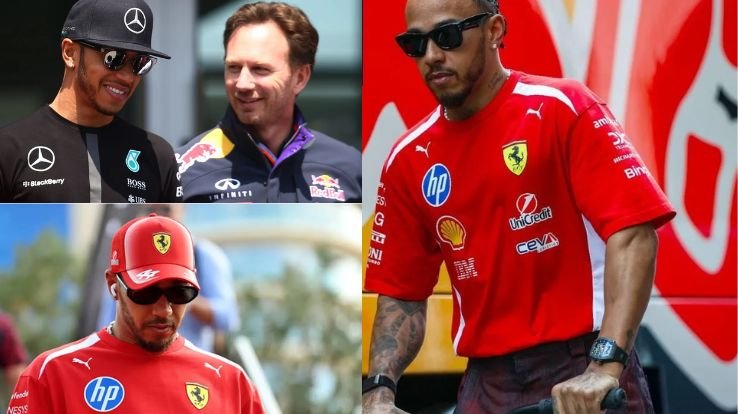
Christian Horner reveals 2012 talks before Mercedes Era.
Christian Horner, former Red Bull Racing team principal, has revealed that Lewis Hamilton once explored joining Red Bull before his career‑defining move to Mercedes in 2013. In his autobiography Drive, Horner recounts how Hamilton, unsettled at McLaren in 2012, held private discussions with Red Bull leadership about a potential switch.
Hamilton had raced for McLaren since 2007 and won the 2008 world championship, but by 2012 his enthusiasm was waning. Mechanical failures and a strained partnership with teammate Jenson Button left him frustrated. Horner recalls seeing Hamilton at races and sensing vulnerability in a driver who had already established himself as one of the sport’s elite.
The turning point came during a discreet meeting at Adrian Newey’s home near Ascot. Hamilton reportedly asked, “What will it take to join you guys?” The idea of pairing him with reigning champion Sebastian Vettel thrilled Newey, who believed Hamilton’s pace and charisma would further elevate Red Bull’s profile.
Simon Fuller, the entertainment mogul known for managing the Spice Girls, David Beckham, and Andy Murray, led negotiations. Fuller pitched Hamilton’s arrival as “the biggest sports deal since Muhammad Ali,” emphasizing both his commercial appeal and his star power. By then, Hamilton was already a global icon, fronting advertising campaigns and admired for his fearless driving, particularly in wet conditions.
Despite the allure, internal tensions surfaced. Red Bull adviser Helmut Marko, closely tied to Vettel’s rise, feared Hamilton’s presence would disrupt the reigning champion’s dominance. Financial considerations also proved decisive. Horner admits that the sums required to secure Hamilton were “staggering,” making the deal difficult to justify even with the marketing upside.
Ultimately, Red Bull chose not to pursue the move, and Hamilton signed with Mercedes. The decision reshaped Formula 1 history. With Mercedes, Hamilton went on to win six drivers’ titles, creating one of the sport’s most successful driver‑team partnerships. Meanwhile, Red Bull continued its dominance with Vettel before later building a new era around Max Verstappen.
Reflecting on the missed opportunity, Horner acknowledges Hamilton’s extraordinary talent and commercial magnetism. “Overall, he was just about the perfect challenger to Sebastian,” he writes. The revelation adds a fascinating twist to F1’s past: had Red Bull acted differently, Hamilton’s career trajectory and the sport itself might have been dramatically altered.