After more than 14 years of research, there’s still something to be surprised by.
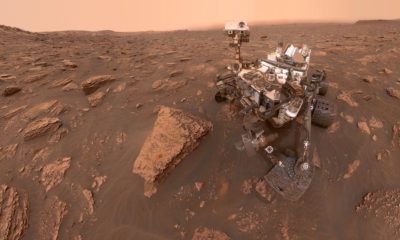
NASA found something different on Mars. NASA has found unusual holes across Mars when the Curiosity rover was travelling down a broad valley named ‘Valle Grande’ on Mount Sharp inside Gale Crater. According to NASA, cameras spotted broad, shallow pits that stood out against the nearby dusty landscape.
Though space agencies frequently photograph impact craters left by meteorites, these formations look entirely different, as Dr Michelle Minitti, MAHLI Deputy Principal Investigator, wrote in a blog post that “such pits are not unusual”, but the “pits of this week were much broader and shallower than past geographies and were not accompanied by noticeable objects that were once in the pits”.
She further stated that “after Curiosity’s 14 years on the surface, Mars endures to astonishment.”
Early sun may have devoured a super-Earth, scientists say
The rover used its photo colour camera, the Mars Hand Lens Imager (MAHLI), to take close-range photos, and Mastcam captured overlapping images of the nearby terrain.
Scientists later combined and managed the photos to build three-dimensional surface models, allowing them to measure the pits’ shapes and depths.
According to NASA, the pit is about 1 centimetre (0.39 inches) in diameter, and Curiosity formed the composite on August 19, 2026, at 07:59:21 UTC.
“They were a welcome new puzzle in the procedures that have affected this specific section of rocks in the stratigraphy of Mount Sharp,” she added in the blog post.
Further, she added, “The ‘typical’ bedrock was anything but boring. Mastcam imaged and ChemCam rastered across complex packages of layers with variations in texture and structure over short vertical differences.”
ChemCam studied one of the gray float rocks, similar to the small, loose pebble in the image above, which has been scattered patchily across our workspaces, to help us understand the origins of these stones.