Military revives rare mass casualty preparations to ensure respectful handling and identification of fallen troops.
The United States Army has resumed specialized training exercises focused on temporary battlefield burials, marking the return of a practice rarely seen since the Korean War. The move reflects the military’s efforts to prepare for potential large-scale conflicts that could result in significant casualties and place extraordinary pressure on evacuation and recovery operations.
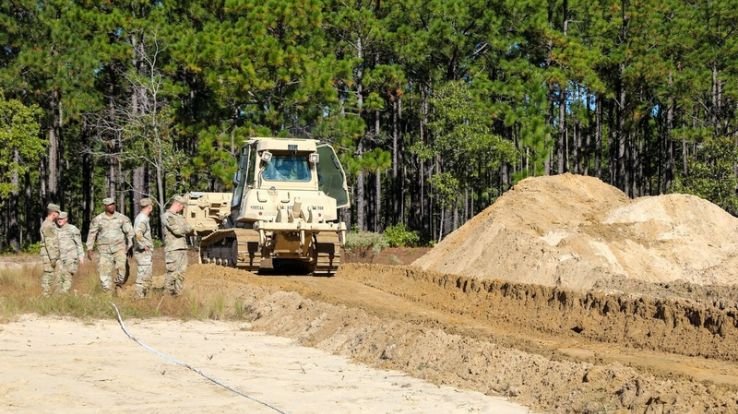
The training exercise recently took place at Fort Bragg, North Carolina, involving soldiers from the 3rd Corps Sustainment Command, the 20th Engineer Brigade, and military chaplains. Participants rehearsed procedures for managing fallen service members when immediate transportation of remains may not be possible because of combat conditions or logistical challenges.
For decades, particularly during the wars in Iraq and Afghanistan, the US military relied on rapid evacuation systems that enabled the swift return of deceased personnel to their families in the United States. As a result, the military had little need for temporary battlefield interment practices. However, military planners now believe future conflicts could present very different circumstances, requiring forces to prepare for high-casualty scenarios.
During the exercise, troops used heavy machinery, including excavators and digging equipment, to create temporary burial sites. The goal was not simply to manage large numbers of casualties, but to test procedures designed to protect and preserve remains until they can be recovered, scientifically examined, identified, and ultimately repatriated.
Army officials emphasized that maintaining accountability for fallen soldiers remains a critical responsibility in combat operations. Temporary burial methods must ensure that remains stay intact and can later be identified through forensic and anthropological examinations. Accurate records and control at every step are essential components of military casualty management.
Military chaplains and religious affairs specialists also participated in the training, marking the first such exercise in more than two decades. Their role focused on ensuring that soldiers receive appropriate religious and ceremonial honours even under the difficult circumstances of battlefield operations.
According to military leaders involved in the drill, the exercise highlighted the importance of preparing in advance rather than developing procedures during an actual conflict. Officials described the training as a practical and carefully tested approach to ensuring that fallen service members are treated with dignity and respect at every stage.
The renewed focus on temporary battlefield interment underscores the Army’s broader effort to strengthen readiness for future high-intensity warfare, where traditional casualty evacuation systems may face unprecedented challenges and where careful planning could prove vital in honouring those who make the ultimate sacrifice.