Ceremony highlights fragile truce as leaders face disputes over AI, trade, and Iran.
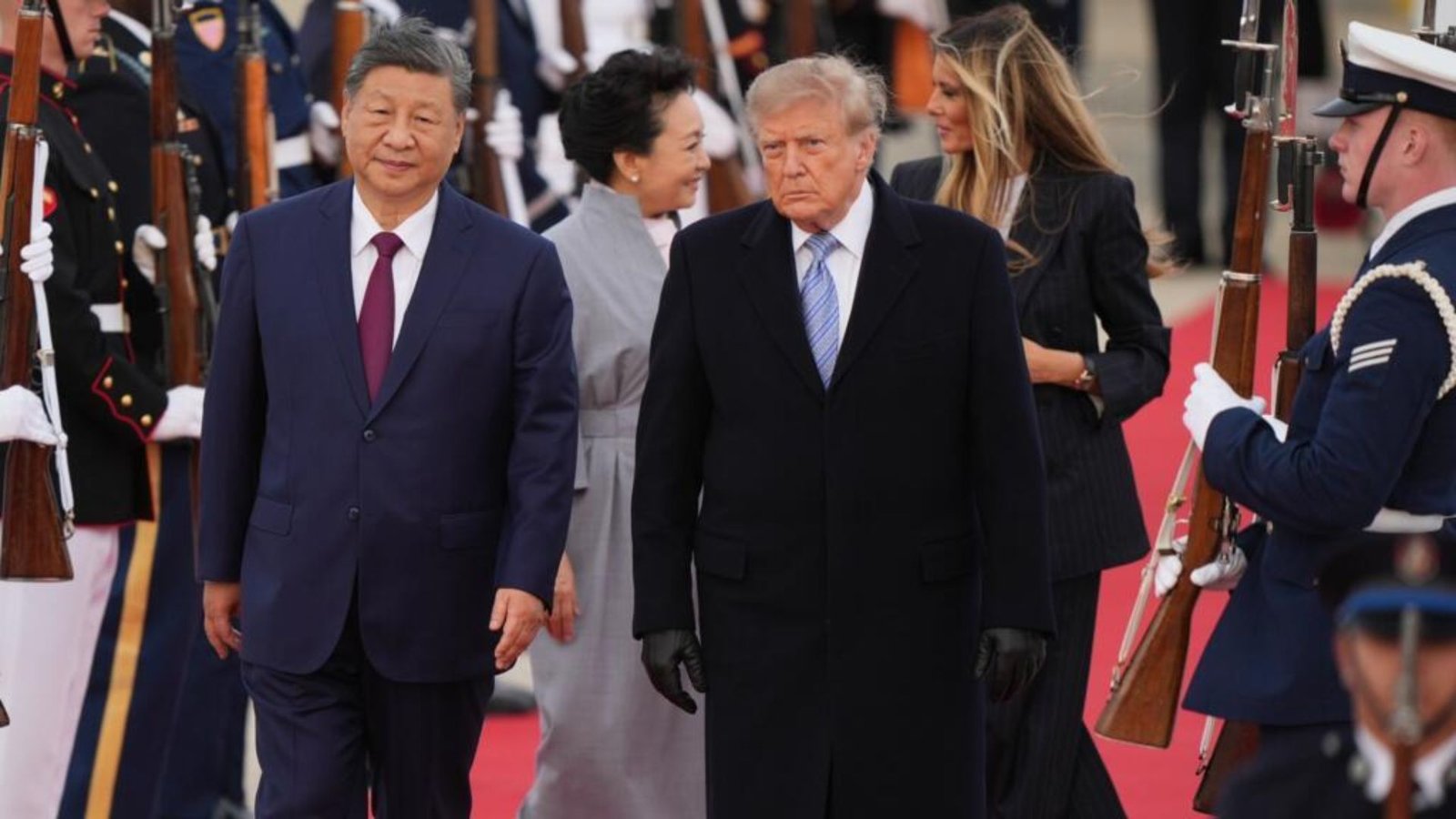
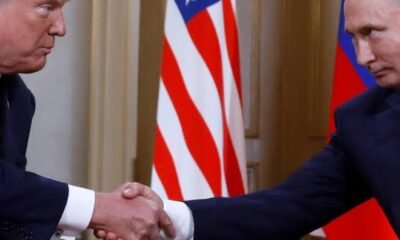
Chinese President Xi Jinping touched down in Washington on Wednesday to an unusually personal reception from US President Donald Trump, signalling the start of a high‑profile state visit to ease tensions between the two global powers. At Joint Base Andrews, Trump and First Lady Melania greeted Xi and his wife Peng Liyuan with handshakes before a military band struck up and two B‑1 bombers thundered overhead. Rows of F‑22 and F‑16 fighter jets lined the runway, underscoring America’s military strength as the red carpet was rolled out.
The grand welcome, rarely extended by US presidents, contrasted with Trump’s own visit to Beijing earlier this year, where he was denied similar honours. Analysts suggest the spectacle is designed more to preserve a fragile diplomatic truce than to deliver breakthroughs. Xi’s delegation notably excluded Chinese business leaders, even as prominent US technology executives are expected at Thursday’s White House banquet.
Talks between Treasury Secretary Scott Bessent and Chinese Vice Premier He Lifeng earlier this week prepared the ground for discussions on artificial intelligence. Both nations are racing for dominance in the field, with US industry leaders warning of existential risks while Beijing presses ahead with rapid development. Expectations remain low for any binding agreement, though officials have floated the idea of a communication channel to manage AI concerns. The ongoing trade war also looms large, with hopes of extending a tariff truce reached last year.
Trump’s decision to stage such a lavish welcome has drawn criticism from within his own party. Republican Senator Roger Wicker labelled Xi an “oppressive dictator” and questioned the wisdom of honouring him amid reports of Chinese intelligence support for Iran. Trump has dismissed the controversy, arguing that espionage is mutual between Washington and Beijing. For the president, the visit also offers a chance to shift attention from domestic challenges, including rising fuel prices linked to the Iran conflict, which have driven his approval ratings to historic lows ahead of November’s midterm elections.
The visit continues with a state banquet Thursday and concludes Friday with tea at the White House and a symbolic stop at the National Archives. While few expect concrete policy outcomes, the ceremonial warmth reflects both leaders’ desire to manage rivalry through spectacle and symbolism, extending what analysts call a “gentleman’s agreement” to buy time in an uncertain geopolitical climate.