Erdogan urges end to Veto power and greater global representation.
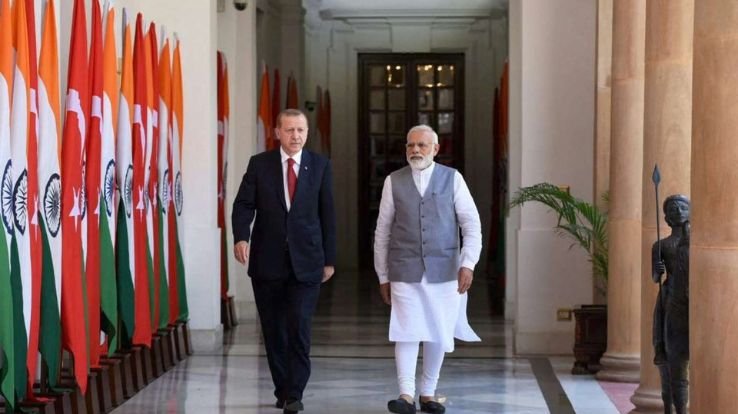
The debate over reforming the United Nations Security Council (UNSC) has intensified, with Turkey joining India in pressing for structural changes to the body that has remained largely unchanged since its creation in 1945. Turkish President Recep Tayyip Erdogan, writing in Bloomberg, argued that “the world is bigger than five,” a reference to the five permanent members- China, France, Russia, the United Kingdom, and the United States, who wield veto authority and dominate global decision‑making.
Erdogan contends that the UNSC reflects outdated post‑World War II power dynamics and fails to represent today’s diverse international community. India has long sought permanent membership and advocated for expansion to include stronger voices from Asia, Africa, and Latin America. Turkey’s intervention adds weight to calls for reform, particularly the demand to abolish the veto system that allows a handful of nations to block collective action.
Highlighting recent global crises such as pandemics, energy disruptions, and regional conflicts, Erdogan argued that leaving solutions to a small group of states has proven ineffective. He proposed eliminating permanent seats, replacing them with rotating members elected by the UN General Assembly for fixed terms. He suggested this would enhance accountability and prevent any single country from obstructing the will of the majority.
The Turkish leader also emphasized the growing influence of Asia and Africa, noting that global governance must reflect their economic and political weight. He criticized globalization for failing to distribute prosperity equitably, insisting that developing nations must be guaranteed access to financing and development opportunities.
Erdogan stressed that the international order cannot be built on past hierarchies. “The system that promised peace and prosperity has failed to prevent wars, reduce inequalities, or adapt to shifting balances of power,” he wrote, underscoring the urgency of reform. He called for stronger roles for regional actors, arguing that solutions imposed from outside often prove unsustainable.
Turkey, he added, will continue to use its diplomatic experience to push for a fairer and more inclusive system. With both India and Turkey now pressing for change, momentum is building toward a reassessment of the UNSC’s role in shaping the future of global governance.