Nine Pakistani soldiers killed as militants intensify operations.
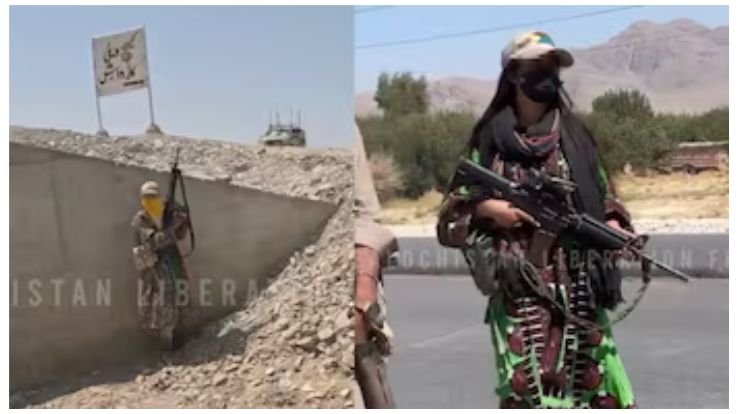
The separatist conflict in Balochistan has entered a new phase with the emergence of the Karima Armed Assault Division (KAAD), the Balochistan Liberation Front’s (BLF) first all-woman combat unit. On September 22, KAAD fighters carried out a close-range ambush on a Pakistani military convoy in Turbat, killing nine soldiers. The group later released footage of the attack, showing rifle-armed women firing at a three-vehicle Quick Response Force (QRF) convoy along the China-Pakistan Economic Corridor (CPEC) highway.
The video begins with a female commander briefing her team before they strike from just meters away, underscoring their training and discipline. BLF spokesperson Major Gwahram Baloch claimed several military vehicles were damaged and confirmed that the group’s Qurban unit provided cover during the withdrawal. One fighter, Chakar Murad alias Dileep Jan, was reported killed in the operation.
KAAD, named after slain activist Karima Baloch, symbolizes a shift in the insurgency by placing women at the forefront of armed resistance. Karima, a former chairperson of the Baloch Students Organisation-Azad, was found dead under mysterious circumstances in Toronto in 2020, and her legacy continues to inspire separatist movements.
The Turbat ambush was part of a wider escalation across Balochistan. The Baloch Republican Army (BRA) attacked the Mari Energies Limited site in Dera Bugti with rockets and heavy weapons, killing three employees and injuring several others. The group claimed nine Pakistani soldiers and three members of a local militia were also killed in clashes that followed, while six BRA fighters lost their lives.
Meanwhile, the Baloch Republican Guards (BRG) announced that its forces seized Haji Shehr, destroyed a police station with explosives, and briefly took control of government facilities in Eri Shehr before withdrawing.
These coordinated strikes highlight the growing sophistication of Baloch militant operations, which now combine symbolic gestures such as the deployment of women fighters- with heavy assaults on state infrastructure. Analysts note that the involvement of female combatants adds a new dimension to the insurgency, challenging traditional perceptions of the conflict and signalling a broader mobilization of Baloch society.
For Pakistan, the attacks underscore the mounting challenge of securing the restive province. With insurgent groups expanding their tactics and intensifying their strikes, the state faces renewed pressure to respond to a conflict that continues to claim lives and destabilize the region.