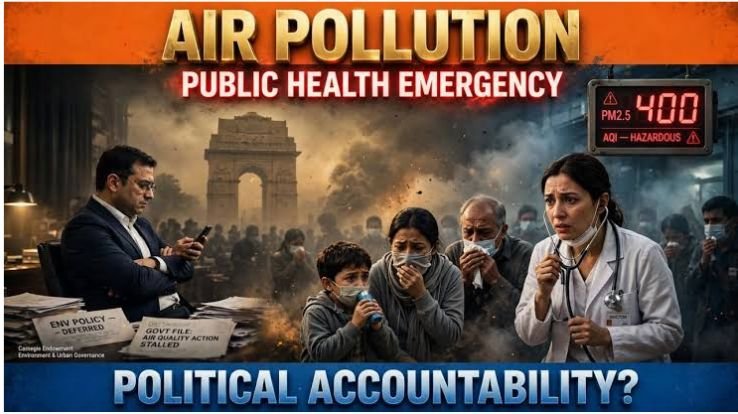
Dr. Soumya Swaminathan urges a coordinated national strategy, warning that millions of lives and future generations are at risk.
As toxic smog once again blankets Delhi and several other Indian cities after Diwali, health experts are raising concerns about the long-term consequences of air pollution. Former World Health Organization (WHO) Chief Scientist Dr. Soumya Swaminathan believes India must stop treating pollution as a seasonal environmental issue and recognise it as a major public health crisis.
According to Dr. Swaminathan, the country’s current response often comes too late, after pollution levels have already become dangerous. She argues that India needs a strong, coordinated effort, similar to that seen during the COVID-19 pandemic. Such an approach would involve collaboration across government departments, dedicated financial support, and clear accountability to reduce pollution over the long term.
One of the most alarming aspects of the crisis is its impact on children. Exposure to polluted air can begin before birth, affecting pregnant women and unborn babies. Because children’s lungs, brains, and other organs are still developing, they are particularly vulnerable to harmful pollutants. Dr. Swaminathan warns that continuous exposure could lead to lifelong health problems, preventing many children from becoming healthy adults.
Air pollution affects more than just respiratory health. Research increasingly links poor air quality to heart disease, diabetes, cognitive impairment, and neurodegenerative disorders such as Parkinson’s disease and dementia. There is also growing concern about lung cancer among non-smokers, highlighting the widespread dangers of prolonged exposure to toxic air.
Experts estimate that air pollution causes nearly two million deaths in India each year. Unlike smoking, which is a personal choice, breathing polluted air is unavoidable for millions of people. While northern states often attract the most attention because of severe winter smog, pollution is a nationwide problem affecting cities and towns across the country.
Dr. Swaminathan believes that emergency measures alone cannot solve the issue. While temporary restrictions under pollution-control plans may reduce exposure during severe episodes, lasting progress requires addressing the root causes. She advocates cleaner public transport, stricter industrial regulations, improved waste management, wider adoption of electric vehicles, and affordable access to clean cooking fuels in rural areas.
She also emphasises strengthening air quality standards and focusing more on harmful fine particles such as PM2.5. Furthermore, integrating health and environmental data could help authorities identify vulnerable populations and target interventions more effectively.
For Dr. Swaminathan, the science is already clear. The challenge is no longer understanding the problem but securing the political commitment needed to act decisively and protect public health for future generations.