Repatriation of 39 human remains marks a significant moment in addressing colonial-era legacy.
In a historic move that has brought closure to many members of the Naga community, Oxford University’s Pitt Rivers Museum has returned the ancestral remains of 39 Naga individuals to India. The remains, largely consisting of skulls collected during Britain’s colonial administration, had been held in the United Kingdom for several decades before being handed back to representatives of Nagaland.
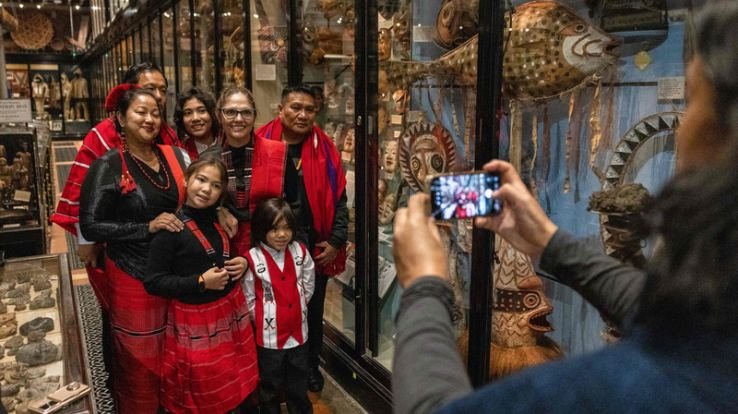
A delegation of nearly 30 Naga community members travelled from India’s north-eastern region to Oxford to witness the formal transfer. The ceremony signified more than the return of physical remains; it marked a long-awaited acknowledgment of historical injustices linked to colonial-era collecting practices.
The ancestral remains were brought to Oxford between 1910 and 1940, a period when colonial officials and researchers frequently gathered cultural artefacts and human remains from territories under British rule. Many of the Naga remains were acquired by administrators who also worked as anthropologists, reflecting the era’s scientific attitudes. While such collections were once considered acceptable for research and museum display, modern ethical standards have prompted institutions worldwide to re-examine how these materials were obtained.
The return forms part of a broader international effort by museums to address the colonial origins of certain collections. In recent years, cultural institutions across Europe and beyond have increasingly repatriated Indigenous artefacts and human remains to descendant communities. The Pitt Rivers Museum itself has previously returned remains to Indigenous groups in countries including Australia, New Zealand, and the United States.
For the Naga delegation, the moment held deep cultural and emotional significance. Community leaders have announced plans to inter the remains beneath a shared memorial in Nagaland, ensuring the ancestors receive a respectful and dignified resting place. Many believe the repatriation helps restore a connection disrupted generations ago.
Museum officials acknowledged that the remains entered the collection at a time when ethical considerations regarding consent and ownership differed markedly from those today. The institution has gradually reviewed its collection practices and removed human remains from public display, reflecting evolving perspectives on cultural sensitivity and respect.
Naga representatives also questioned whether the remains had ever been voluntarily surrendered. For many families and communities, surrendering ancestral remains would have been unimaginable. Their return is therefore seen as an important act of recognition and reconciliation.
The repatriation serves as a powerful reminder of the need to confront historical injustices and to foster respectful relationships between museums and the communities whose heritage they preserve.