Lewis Pullman highlights India’s unique diversity, challenging western stereotypes.
Australia’s Lewis Pullman has sparked conversations online after sharing his awe at India’s vast diversity, saying the country defies the singular image often portrayed in the West. Documenting his travels on Instagram, Pullman described India as a place where every state feels like “its own entity,” offering distinct landscapes, traditions, and experiences that surprised him at every turn.
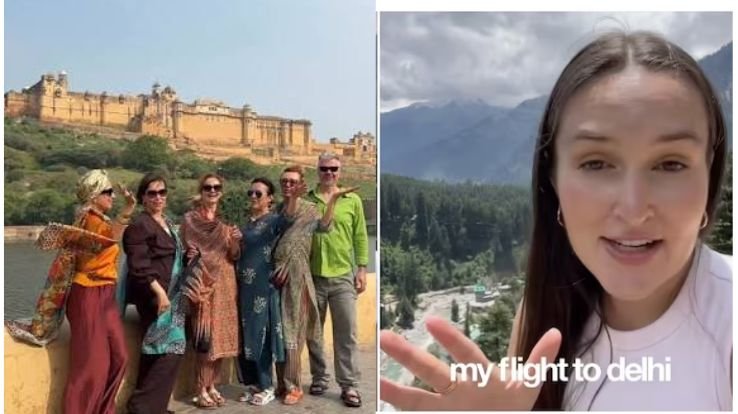
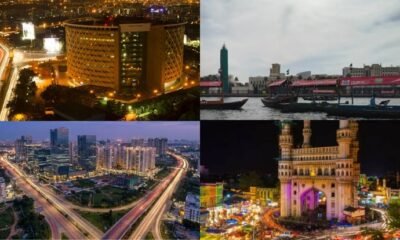
Pullman’s journey has taken him from the deserts of Rajasthan to the snow-covered slopes of Kashmir, and now to Himachal Pradesh, where he has been learning to paraglide. He noted that such activities are far more affordable in India compared to back home, making adventure accessible to a wider audience. Reflecting on his travels, he emphasized how dramatically the scenery and culture shift across regions. “Guys, I’m telling you, you all are sleeping on India,” he said, pointing out that the Western narrative often oversimplifies the country.
His observations highlighted the contrast between states: Punjab’s vibrancy, Rajasthan’s arid beauty, and Himachal Pradesh’s mountainous charm. Pullman remarked that within hours of travel, one can encounter entirely different worlds, from spiritual centres like Dharamshala, home to the Dalai Lama, to bustling plains and serene valleys. Looking ahead, he expressed curiosity about India’s eastern states, known for their cultural richness, admitting he has “no idea what’s even there” but is eager to explore.
The video quickly resonated with viewers, many agreeing that India’s diversity is unparalleled. Comments praised the country’s ability to feel like “a different world” in each state, echoing Pullman’s sentiment that India may well be “the most diverse country in the world.”
Pullman’s reflections underscore a growing recognition among international travellers that a single image cannot define India. Instead, it is a mosaic of cultures, languages, and landscapes that challenge preconceived notions. His experiences remind readers that India’s richness lies not only in its history and traditions but also in the everyday contrasts that make each journey unique.
At a time when global perceptions often reduce India to stereotypes, Pullman’s account offers a refreshing perspective- one that celebrates the country’s complexity and invites others to see beyond the clichés. For him, India is not just a destination but a revelation, proving that diversity is its greatest strength.