Cabinet Approves Caste Census in National Population Survey; Vaishnaw Targets Congress
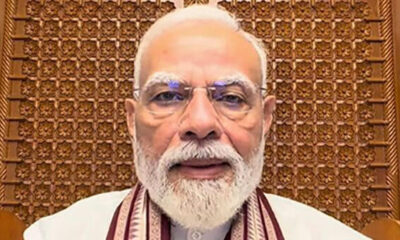
In a landmark decision, the Union Cabinet on Wednesday approved the inclusion of caste-based enumeration in the upcoming national population census. Announcing the move, Union Minister Ashwini Vaishnaw said the decision was taken by the Cabinet Committee on Political Affairs (CCPA), chaired by Prime Minister Narendra Modi, with the aim of ensuring social and economic empowerment across communities in a transparent and inclusive manner.
“The Cabinet Committee on Political Affairs has decided to include caste enumeration in the forthcoming census exercise. This will help empower society and aid the nation’s development,” Vaishnaw said at a press briefing.
He further launched a scathing attack on the Congress and the INDIA bloc parties, accusing them of historically opposing caste census and using the issue merely for political gain. “Congress governments have always resisted caste enumeration. In 2010, then Prime Minister Dr. Manmohan Singh deferred the matter to a group of ministers, even though most political parties had recommended a caste census,” Vaishnaw claimed.
Criticizing previous attempts at caste-based surveys by various state governments, Vaishnaw said some states conducted the surveys in a non-transparent and politically motivated manner, which led to doubts in society. “To avoid such confusion and maintain the social fabric, caste enumeration must be part of the formal national census process,” he added.
The national census, originally scheduled to begin in April 2020, was delayed due to the Covid-19 pandemic. Had it proceeded on time, the results would have been published in 2021.
Vaishnaw also reiterated that while the Congress and its allies had often demanded a caste census, they failed to follow through with concrete action. He pointed out that the 2011 Socio-Economic and Caste Census (SECC), conducted under the UPA government, failed to deliver usable caste data.
The announcement was welcomed by several leaders across party lines. Bihar Chief Minister Nitish Kumar, a BJP ally, hailed the move as a significant step forward. “The decision to conduct a caste census is welcome. This has been our longstanding demand. Knowing the population of different communities will help the government create better development policies,” Kumar posted on X (formerly Twitter). Bihar had earlier tabled its own caste census report in October 2023, which revealed that 36% of the state’s population belonged to the Extremely Backward Class and 27.13% to the Backward Class.
Meanwhile, in a renewed push for caste-based equity, Congress leader and Leader of Opposition in the Lok Sabha, Rahul Gandhi, recently pledged to remove the 50% cap on reservations for Scheduled Castes (SC), Scheduled Tribes (ST), and Other Backward Classes (OBC) in education and public employment.
In addition to the caste census, the Cabinet Committee also approved several other key initiatives. These include the development of a 166.80 km greenfield high-speed corridor (NH-6) from Mawlyngkhung near Shillong to Panchgram near Silchar in Assam. The project, which will be executed in Hybrid Annuity Mode (HAM), is estimated to cost ₹22,864 crore and aims to enhance connectivity in the Northeast.
The government also approved the Fair and Remunerative Price (FRP) of sugarcane for the 2025-26 sugar season. The FRP was fixed at ₹355 per quintal for a base recovery rate of 10.25%, with a premium of ₹3.46 for each 0.1% increase in recovery and a similar reduction for lower recovery rates.
With the Cabinet’s approval, the long-pending issue of caste enumeration appears to be moving forward in a structured and official manner, setting the stage for what could be a historic census.
IT.