Connect with us

Indian Daily Post

Dipke Shares School Washroom Photo, Mocks Modi’s Growth Claim

Politics

Dipke Shares School Washroom Photo, Mocks Modi’s Growth Claim

Dipke Shares School Washroom Photo, Mocks Modi’s Growth Claim

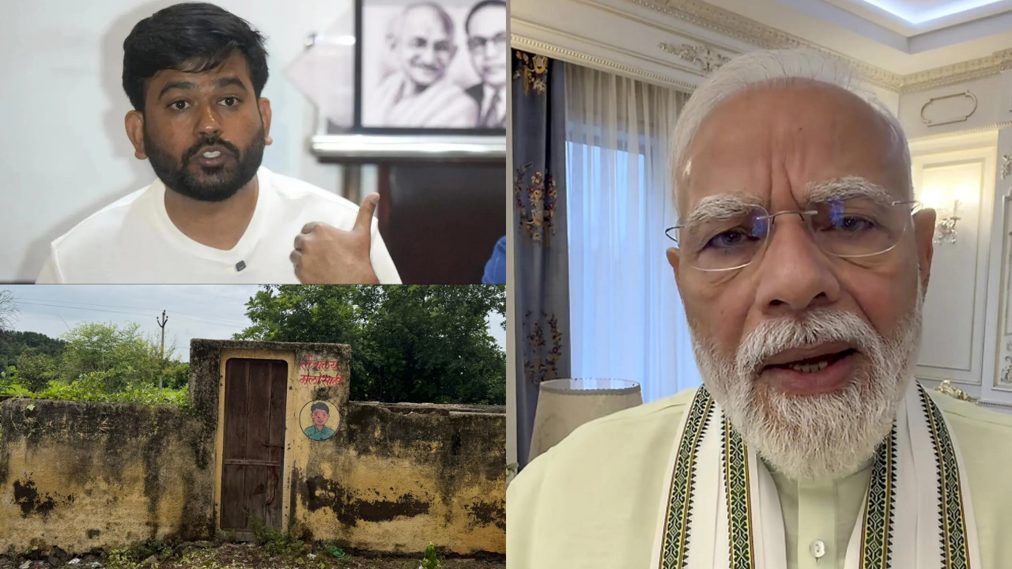
Abhijeet Dipke, founder of the CJP, has once again taken aim at the Union Government and Prime Minister Narendra Modi over the state of public infrastructure. The activist shared a photograph of a rundown washroom at a government-run school on social media, pairing it with a sarcastic caption referencing India’s oft-cited 7.8% growth rate. The post was widely shared and drew reactions from social media users, many of whom saw it as a pointed critique of the disconnect between headline economic figures and ground-level realities in public institutions.

The Post and Its Context

Dipke’s remark came shortly after the Prime Minister posted a video highlighting India’s economic progress. By juxtaposing the government’s growth narrative with an image showing poor sanitation infrastructure at a school, Dipke sought to underline what he views as a gap between macroeconomic statistics and the everyday experience of citizens who depend on public services. The post is part of a broader pattern of social media activism by Dipke, who has previously used similar posts to question official claims and government messaging.

Online Reactions and Broader Debate

The photo and caption quickly gained traction online, feeding into an ongoing debate about how growth statistics are perceived versus the lived reality of public infrastructure, particularly in education. Critics of the government have often pointed to conditions in government schools as evidence that economic growth has not translated into adequate investment in basic amenities. Supporters of the administration, meanwhile, typically argue that infrastructure improvements are underway and take time to reach all regions. The exchange highlights how social media continues to serve as a platform for direct public criticism of government leaders and policy narratives in India.

Continue Reading
You may also like...
Click to comment

Leave a Reply

Your email address will not be published. Required fields are marked *

More in Politics

To Top