New export restrictions on key construction equipment highlight Beijing’s growing use of industrial dominance as a strategic tool.
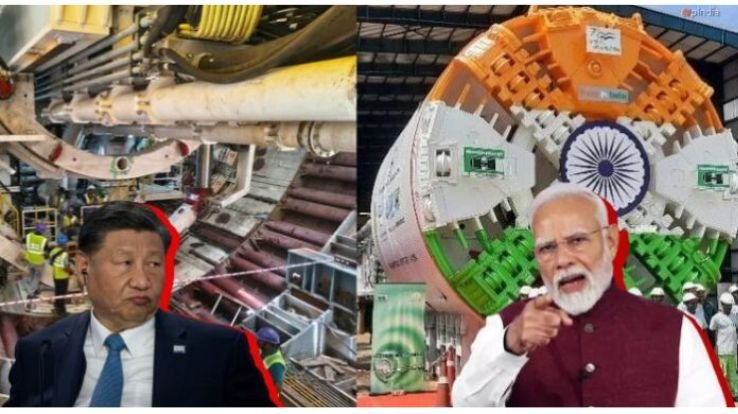
China’s decision to tighten export controls on specialised construction equipment has added a new dimension to its expanding trade and strategic policies. While global attention has largely focused on restrictions on advanced technologies and rare earth minerals, Beijing has now turned its attention to heavy engineering machinery, particularly tunnel-boring machines (TBMs), a sector in which Chinese manufacturers hold a commanding global position.
These massive machines are crucial to building underground infrastructure, including metro networks, rail tunnels, highways, and mountain passages. Their importance extends beyond civilian projects, making them valuable strategic assets for countries investing heavily in transport and border infrastructure. India, one of the major importers of such equipment, could feel the effects of the new restrictions more than most.
China has justified the move by citing concerns that the machinery can serve both civilian and military purposes. The regulations also call for stricter scrutiny of destinations in regions involved in disputes with China. That wording has drawn attention in India, where infrastructure development along the Himalayan frontier remains a national priority.
In recent years, New Delhi has accelerated efforts to improve connectivity in border regions by building roads, railway corridors, and tunnels to reduce travel and deployment times. Many of these projects rely on specialised equipment sourced either directly or indirectly from Chinese manufacturers. As a result, supply disruptions could affect construction schedules and increase costs.
The issue extends beyond purchasing new tunnel-boring systems. Existing machines require a steady supply of replacement parts and technical components due to constant wear during operations. Industry observers warn that restrictions on spare parts could create maintenance challenges for ongoing projects, reduce operational efficiency, and increase dependence on alternative suppliers.
China’s dominance in the sector is significant, with industry estimates placing the country at roughly 70 per cent of the global market. Although manufacturers in Germany, Japan, and the United States offer alternatives, replacing Chinese suppliers is unlikely to happen quickly. Costs, production timelines, and technical compatibility remain major obstacles.
At the same time, the restrictions may accelerate India’s efforts to build domestic capabilities. Policymakers have already encouraged local production of advanced construction equipment, and leading engineering companies are exploring indigenous tunnel-boring technology. However, industry leaders acknowledge that matching China’s scale and pricing advantages will take time and substantial investment.
In the near term, China’s latest controls could pose challenges for infrastructure projects. Over the longer term, however, they may encourage India to strengthen local manufacturing, diversify supply chains, and reduce reliance on a single foreign source for strategically important equipment.