Neurosurgeon cautions against equating consumer tech with clinical diagnosis.
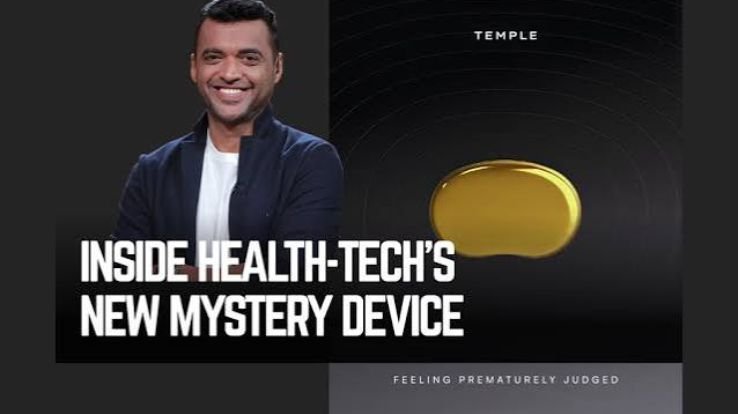
Temple, a new wearable introduced by Zomato founder Deepinder Goyal, has generated buzz as the smallest device designed to monitor brain health. Marketed as a breakthrough in personal wellness, it claims to measure cerebral blood flow and calculate a proprietary metric called “Entropy,” which is said to reflect stress levels, cognitive load, and early signs of brain ageing. The device attaches to the Temple and syncs with smartphones via Bluetooth, positioning itself as a tool to enhance longevity and mental performance.
Despite the excitement, medical experts are urging consumers to temper expectations. Dr. Arun L. Naik, an AIIMS‑trained neurosurgeon, recently addressed the device’s limitations on social media. He described Temple as a “Bluetooth bindi with a business plan of 500 crores,” stressing that while it is an impressive piece of consumer technology, it cannot replace clinical investigation.
Dr. Naik explained that neurosurgeons often use light‑based sensors during surgery to measure oxygen levels in the brain. However, translating this principle into a consumer gadget introduces anatomical challenges. “Put your finger on your Temple. Feel that pulse? That’s your superficial temporal artery. It feeds your scalp,” he noted. “Your brain runs on deep arteries- the internal carotids and vertebrals. None of them is sitting under your skin waiting to be measured.”
This distinction underscores a critical limitation: Temple primarily tracks signals from the scalp rather than the deeper arteries that sustain the brain. While the device may provide interesting lifestyle data, it lacks the precision required for medical diagnosis. Dr. Naik emphasized that consumer wearables should not be mistaken for clinical tools, as they cannot detect neurological disorders or provide definitive evidence of brain health.
The debate reflects a broader question about the role of consumer health technology. Devices like Temple may encourage individuals to monitor stress and recovery, but experts caution against over‑reliance. Clinical assessments remain the gold standard for evaluating neurological well‑being, and wearables should be viewed as supplementary rather than authoritative.
As Temple gains attention for its innovative design, the medical community continues to remind consumers that brain health cannot be reduced to a single metric. For now, Temple may serve as a motivational tool, but it cannot replace the expertise of trained clinicians or the rigor of medical investigation.